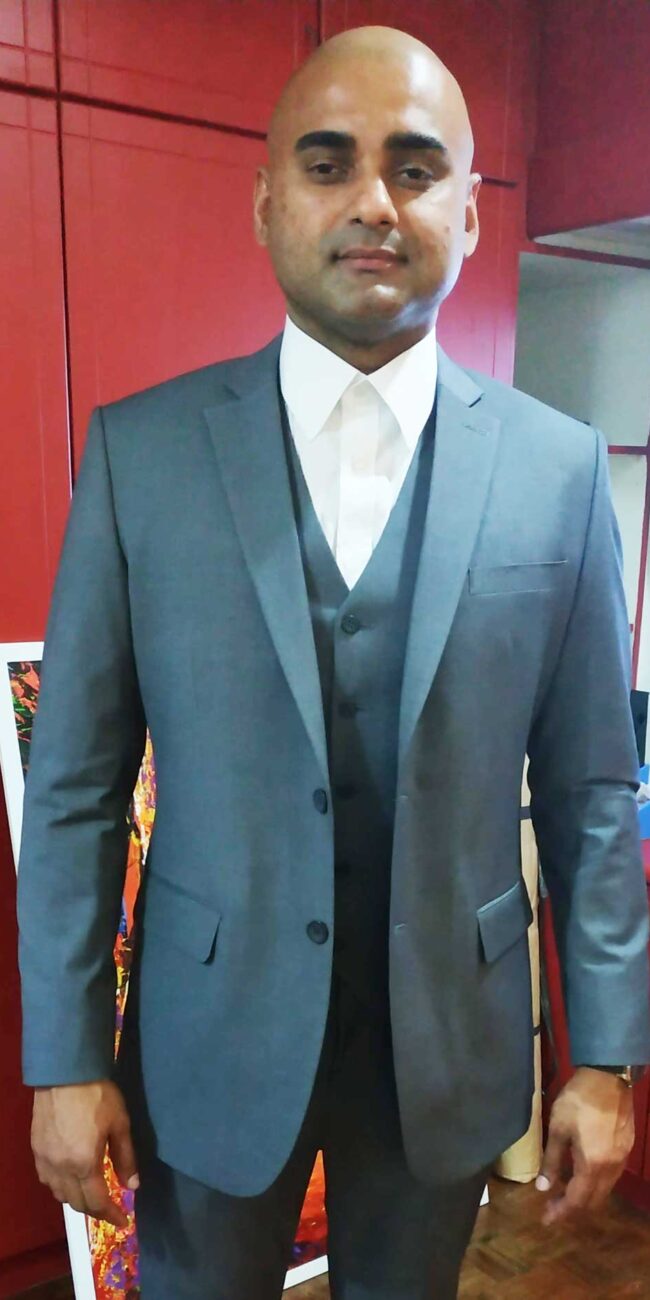
Premier Suit Tailor of Kuala Lumpur
How to Select the Best Suit Tailor Near Me, Tailored Suits Near Me or Affordable Suit from Google Searches
THE BESPOKE SUIT | SMART BUYING, TAILORING CRAFTSMANSHIP & THE ART OF FINDING THE RIGHT SUIT
Google can help you find hundreds of suit tailors in seconds. But can the first result guarantee the best fit, quality or price? Discover how to look beyond Google rankings, compare craftsmanship, understand suit construction and choose the right tailor for your personal style and budget.
A beautiful suit is one of the few garments that can transform the way someone presents themselves.
The right shoulders create a confident silhouette. The proper jacket length brings balance to the body. A well-shaped waist enhances proportion, while carefully chosen fabric gives the entire outfit its character.
Yet the journey to finding that perfect suit often begins with something remarkably ordinary.
A Google search.
Type “suit tailor near me”, and a collection of nearby tailoring businesses appears.
Search “tailored suits near me”, and you may discover bespoke tailors, made-to-measure specialists, clothing retailers and online tailoring services.
Enter “affordable suit”, and the results shift toward promotional packages, ready-made clothing and budget-conscious tailoring options.
Within seconds, you are presented with photographs, ratings, advertisements, locations, prices and customer reviews.
But which result deserves your trust?
Is the highest-ranked tailor necessarily the most skilled?
Does a five-star rating guarantee better workmanship?
Will an expensive bespoke suit always fit better than an affordable made-to-measure alternative?
And how can you distinguish a genuinely experienced suit tailor from a business that simply offers attractive photographs and persuasive marketing?
These are questions every informed buyer should consider.
The smartest way to choose a suit tailor is not to find the first result on Google. It is to understand what makes a suit worth buying.
01 | The Google Search Trap: First Does Not Always Mean Best
Understanding What Google Is Actually Showing You
When searching for a suit tailor in Kuala Lumpur, Petaling Jaya or another part of Malaysia, the results may include sponsored advertisements, Google Maps business listings and ordinary website results.
These different results should not be interpreted as one universal ranking of tailoring quality.
Google’s local business results are primarily influenced by factors such as relevance, distance and prominence.
A nearby business may rank well because it matches the searcher’s location and query.
A popular tailoring company may receive greater visibility because of its established online presence and customer activity.
A sponsored advertisement appears through a separate advertising system.
None of these placements is a direct assessment of garment construction, fitting precision or tailoring craftsmanship.
A Highly Ranked Tailor Can Still Be the Wrong Choice
Imagine searching for “suit tailor near me” and finding a company with hundreds of reviews.
The photographs look attractive, and the ratings are impressive.
However, the business may specialise primarily in straightforward alterations or limited made-to-measure designs.
You, on the other hand, may be looking for a highly customised double-breasted suit with specific lapel proportions, unusual pockets and a distinctive internal construction.
The company might be excellent at its chosen specialty but unsuitable for your requirements.
Similarly, a smaller tailoring studio with less search visibility may offer the fabric selection and design flexibility you need.
The lesson is simple.
Google helps you discover tailors. It does not replace the process of evaluating them.
Search More Intelligently
Instead of relying on one broad search phrase, refine your search according to your actual requirements.
| Google search phrase | What you may be looking for |
|---|---|
| Suit Tailor Near Me | Nearby tailoring businesses and fitting locations |
| Tailored Suits Near Me | Custom, made-to-measure and bespoke suit services |
| Affordable Suit Malaysia | Budget-friendly ready-made or tailored suits |
| Bespoke Suit Tailor Kuala Lumpur | Tailors offering extensive personalisation |
| Men’s Suit Tailor KL | Men’s formal and business tailoring |
| Women’s Suit Tailor Petaling Jaya | Women’s corporate and fashion tailoring |
| Wedding Suit Tailor Malaysia | Wedding-focused suit specialists |
| Custom Blazer Malaysia | Individual blazer design and customisation |
Different searches may reveal different businesses.
Using more specific search terms can help identify tailors whose services match your expectations.
THE SEARCH PRINCIPLE
“Google can show you who is visible. Your research determines who is suitable.”
02 | Read Google Reviews Like an Investigator
Five Stars Tell Only Part of the Story
Customer reviews are valuable because they provide another perspective beyond the tailoring company’s own advertising.
However, an overall rating should never be the only deciding factor.
A tailor with hundreds of short positive reviews may appear more established than a smaller business with fewer but highly detailed customer experiences.
Neither situation proves superior tailoring quality.
The real value lies in understanding what customers are describing.
Look Beyond the Star Rating
When reading reviews, pay particular attention to comments about actual garments.
Did customers describe how their suits fitted?
Did the tailor explain fabric choices clearly?
Were fitting adjustments handled professionally?
Was the finished suit delivered according to the agreed schedule?
Did customers receive a garment that matched their original design request?
These details are often more useful than generic statements such as “excellent service” or “highly recommended.”
Look for Real Customer Photographs
Customer photographs can provide additional context.
Photographs taken during weddings, corporate events or fitting sessions may reveal the actual silhouettes a tailor has produced.
Examine the shoulders, lapel shape, trouser length and overall garment balance.
However, remember that photographs can be influenced by posture, camera angles and lighting.
A photograph is useful evidence of completed work, but it cannot fully demonstrate internal construction or comfort.
Read the Less Positive Reviews
A useful buying strategy is to examine a reasonable selection of recent positive, mixed and negative reviews.
Look for repeated themes rather than treating one complaint as conclusive.
If several customers independently describe unclear pricing, delayed delivery or unresolved fitting problems, those issues deserve attention.
Conversely, isolated complaints should be interpreted in context.
Notice How the Tailor Responds
Professional communication matters.
When customers raise legitimate concerns, a business’s response can provide insight into its service approach.
Does the tailor explain the situation constructively?
Does the business communicate respectfully?
Are after-sales arrangements made clear?
These factors become important when purchasing garments that may require fittings or adjustments.
THE REVIEW RULE
“Do not ask only how many customers are satisfied. Ask what those customers were satisfied with.”
03 | Suit Tailor, Made-to-Measure or Bespoke: Know the Difference
Not Every Custom Suit Is Made the Same Way
One of the most important things to understand before selecting a suit tailor is the actual tailoring process.
The terms custom suit, made-to-measure and bespoke are sometimes used loosely in marketing.
However, they can describe different levels of personalisation.
Ready-Made Suits
A ready-made suit is manufactured according to predetermined sizes and specifications.
Customers select a suitable size, and alterations may be performed to improve the fit.
This can be an attractive choice when the garment already fits reasonably well or when immediate availability is important.
Made-to-Measure Suits
Made-to-measure tailoring generally begins with an existing pattern that is adjusted according to the customer’s measurements.
The available customisation may include fabric, lapels, buttons, linings, pockets and selected fit preferences.
The range of modifications depends on the tailor’s production system.
A well-executed made-to-measure suit can offer excellent value for buyers seeking personalised clothing without requiring a fully individual pattern-making process.
Bespoke Suits
Traditional bespoke tailoring involves developing a pattern specifically for the individual customer.
It generally allows extensive control over garment proportions, fit and design, with fitting procedures determined by the tailor’s method.
Bespoke can be especially attractive for people who have unusual body proportions or want distinctive garments with highly specific construction details.
However, the word bespoke alone does not guarantee superior workmanship.
The quality depends on the actual process, technical skill, materials and execution.
Questions Worth Asking
Before placing an order, ask the tailor:
- Will my suit use an existing pattern or a pattern developed specifically for me?
- Which design details can be changed?
- How are measurements collected and translated into the finished garment?
- Will I have an opportunity to try on the suit before final delivery?
- How are fitting adjustments handled?
- Can I request a design based on reference photographs?
The answers will help reveal how much personalisation the service truly provides.
THE TAILORING INSIGHT
“Customisation is not defined by how many options appear in a catalogue. It is defined by how accurately those options can become your finished garment.”
04 | Affordable Suit: What Are You Actually Paying For?
Why a Lower Price Is Not Necessarily a Bad Decision
An affordable suit does not automatically mean poor quality.
Likewise, a high price does not automatically guarantee superior craftsmanship.
Suit prices can vary because of fabric selection, internal construction, pattern development, labour, fitting services, design complexity and business operating costs.
A budget-conscious customer may obtain a suitable professional suit through a straightforward made-to-measure service.
Another customer may prefer to invest more in luxury wool, extensive hand finishing or traditional canvas construction.
The key is understanding what is included.
Look Beyond the Promotional Price
A tailoring advertisement may display an attractive starting price.
Before comparing it with another offer, determine what that price covers.
Does it include the jacket and trousers?
Is the fabric limited to one collection?
Are the lapel design and button arrangement fixed?
Does the promotion cover only a basic single-breasted suit?
Are waistcoats, additional pockets, special linings or other design changes charged separately?
Are fitting adjustments included?
Is there an additional charge for extended sizes or unusual specifications?
A transparent quotation should clarify these details before the customer commits.
The Real Cost of an Affordable Suit
Consider two hypothetical offers.
Suit A has a lower advertised price but limits fabric, lapel style and construction options.
Suit B costs more but includes a broader fabric selection, greater design flexibility and additional fitting services.
Neither offer is automatically better.
A customer seeking a simple suit for an occasional event may prefer Suit A.
Someone planning to wear a suit several times each week may place greater value on the fabric, fit and services included in Suit B.
The right choice depends on the intended use.
Cost Per Wear
A useful way to evaluate a suit is to consider how frequently it will be worn.
A suit purchased for occasional formal events has different value considerations from one used throughout the working week.
For daily businesswear, comfort, maintenance, durability and the ability to coordinate with other wardrobe items become increasingly important.
An affordable suit should therefore be judged through total value, not merely the initial price.
THE SMART BUYER’S RULE
“The best affordable suit is not always the cheapest. It is the one that delivers the right fit, appropriate materials and dependable workmanship within your budget.”
05 | Fabric Intelligence: The Difference You Can Feel
A Beautiful Suit Begins with the Right Material
Fabric selection is one of the most important stages of custom tailoring.
Two suits with nearly identical designs can look and behave very differently depending on their materials.
Fabric influences drape, structure, texture, breathability, comfort and maintenance.
For people living in Malaysia, climate suitability is particularly important.
A business suit may be worn during outdoor travel, in warm public spaces and inside heavily air-conditioned offices.
The ideal fabric should reflect those conditions.
Wool: The Timeless Suiting Material
Wool is valued for its natural drape, resilience and versatility in tailored clothing.
Lightweight tropical wool, particularly suitable open-weave constructions, may offer advantages for warm-weather tailoring.
However, wool quality cannot be judged solely by its fibre name.
Weight, weave, yarn characteristics and finishing all influence how the material performs.
Wool Blends: Versatility and Practicality
Wool-blended materials combine wool with other fibres to produce different characteristics.
Depending on the composition, these fabrics may provide combinations of comfort, structure, durability and easier maintenance.
They can be attractive for professional and everyday business suits.
Polyester and Performance Suiting
Selected polyester-based suiting fabrics can provide shape retention, wrinkle resistance, stretch or easy-care characteristics.
They may be useful for affordable suits, frequent travel and corporate uniform programmes.
However, fabric quality and comfort vary substantially between constructions.
Linen and Cotton-Linen Blends
For relaxed jackets and smart-casual suits, linen and cotton-linen blends offer an attractive alternative.
Their natural texture creates a more casual appearance.
Wrinkling is part of the character of many linen fabrics and should be considered before purchasing.
Ask to Inspect Real Fabrics
A suit tailor should be able to explain the available fabric options and their intended uses.
Whenever practical, request physical fabric samples.
Compare texture, thickness, flexibility and appearance under normal lighting.
If a fabric is promoted as premium English or Italian cloth, ask for the manufacturer’s details and supporting references where appropriate.
Country-of-origin claims should be verified rather than accepted as proof of quality.
THE FABRIC PRINCIPLE
“The right suit fabric is not simply the one with the most prestigious name. It is the one that complements your lifestyle, climate and design.”
06 | Suit Construction: What Is Hidden Inside the Jacket?
The Details That Shape a Suit Long After It Is Purchased
A suit jacket’s outer fabric is only part of its construction.
Beneath the visible surface, internal materials help establish the garment’s shape and structure.
Three broad construction categories are commonly discussed.
Fused Construction
Fused jackets use adhesive-bonded interlining in selected areas to help maintain structure.
This method is common in many ready-made and accessible made-to-measure suits.
Modern fused construction can be suitable when materials and manufacturing quality are appropriate.
Its advantages may include lower production cost and a relatively straightforward manufacturing process.
Half-Canvas Construction
Half-canvas construction generally incorporates a canvas structure through the upper portion of the jacket.
It can provide additional shaping and a more traditional tailored feel through the chest and lapel.
The rest of the jacket may use other construction methods.
Full-Canvas Construction
A full-canvas jacket typically incorporates a canvas layer extending through much of the jacket front.
This construction is associated with traditional tailoring and can support natural shaping and drape.
However, full canvas involves additional labour and often higher cost.
Does Full Canvas Always Mean Better?
Not necessarily for every buyer.
Choosing the Right Suit Tailor for Your Needs
Construction should be evaluated together with fabric, fit, workmanship and intended use.
A well-made fused jacket may serve a customer better than a poorly fitted full-canvas suit.
A beautifully constructed half-canvas suit may provide the ideal balance for someone seeking traditional structure and practical value.
Ask your suit tailor to explain the available construction methods rather than assuming that one term guarantees quality.
THE CRAFTSMANSHIP NOTE
“The best construction is not the most complicated one. It is the construction that supports the garment’s intended shape, comfort and purpose.”
07 | The Fit Test: A Great Suit Should Work with Your Body
Slim Does Not Automatically Mean Well Tailored
One of the most common misconceptions about modern suiting is that a tighter suit is a better-fitting suit.
A narrow waist or closely fitted jacket may create a contemporary appearance, but excessive tightness can distort the fabric and restrict movement.
Good tailoring is about balance.
Shoulder Fit
The jacket shoulder should support the intended silhouette without unwanted distortion.
The ideal shape depends on the wearer’s posture, proportions and preferred design.
Chest Fit
A jacket should close comfortably and maintain a balanced front.
Excessive pulling around the buttons may indicate insufficient room or an unsuitable pattern.
Waist Shaping
The waist should complement the wearer’s body proportions while allowing natural movement.
Jacket Length
The correct length depends on the overall silhouette, torso proportions and styling preferences.
A cropped fashion blazer may follow different design rules from a traditional business jacket.
Sleeve Length
Sleeve length should work with the customer’s arm proportions and intended shirt styling.
Trouser Fit
The trousers should sit appropriately around the waist, hips, thighs and seat.
Pleats, taper, waistband construction and leg opening influence both comfort and appearance.
Women’s Suit Tailoring
Women’s jackets and trousers may require additional attention to bust shaping, waist-to-hip proportions, shoulder balance and garment length.
A professional tailor should be able to explain how the selected pattern accommodates these features.
Movement Matters
Do not evaluate a suit only while standing still.
Sit down.
Raise your arms naturally.
Walk a few steps.
Button and unbutton the jacket.
Check how the trousers behave when seated.
The suit should preserve its intended appearance while supporting reasonable everyday movement.
THE FIT RULE
“A well-tailored suit should complement your body, not force your body to accommodate the suit.”
08 | Design Freedom: Can Your Suit Tailor Make What You Actually Want?
Tailoring Should Be About Personal Style, Not Just Measurements
One of the greatest advantages of custom tailoring is the opportunity to create a suit that reflects individual preferences.
However, design flexibility can differ significantly between tailors.
Some businesses offer a limited range of standard designs.
Others can accommodate more extensive changes to garment shape, construction and decorative details.
Jacket Lapels
Notch, peak and shawl lapels each create a different impression.
Their width, shape and positioning influence the overall appearance.
Single-Breasted and Double-Breasted Designs
The front button arrangement changes the jacket’s silhouette and character.
A single-breasted two-button suit offers classic versatility.
A double-breasted jacket can provide a stronger, more architectural appearance.
Pocket Designs
Flap pockets, jetted pockets, patch pockets, ticket pockets and selected angled variations create different styling effects.
Shoulder Construction
Structured shoulders can produce a more formal silhouette.
Softer shoulders create a relaxed look.
The appropriate choice depends on the design, fabric and body proportions.
Jacket Vents
Centre vents, side vents and ventless construction offer different visual and functional characteristics.
Custom Trousers
Trouser customisation may include pleats, waistband extensions, side adjusters, belt loops, cuffs, pocket arrangements and leg shaping.
Waistcoats
A three-piece suit introduces additional personalisation possibilities.
Waistcoat options can include different necklines, fronts, button arrangements and pocket details.
Lining and Personal Details
Contrasting linings, selected buttons, sleeve buttonholes, embroidered initials and other finishing details can add individuality.
The Reference Photo Test
One practical way to evaluate a tailor’s design capability is to show an actual garment reference.
Ask whether the tailor can reproduce the overall silhouette and which details may need modification.
A capable professional should distinguish between what is technically feasible, what is practical and what is likely to suit the wearer.
THE DESIGN PRINCIPLE
“The advantage of custom tailoring is not simply choosing from a catalogue. It is having the opportunity to create a garment that reflects your own design preferences.”
09 | Convenience Matters: Store Visits, Mobile Tailoring and Digital Measurements
The Best Suit Tailor May Not Be the Closest Shop
When customers search “tailored suits near me”, location is often an important consideration.
But proximity should not be the only factor.
A tailoring service located a little farther away may offer a better process, broader design selection or more suitable fitting arrangements.
For busy professionals, convenience can influence the entire buying experience.
Traditional In-Store Tailoring
An in-store consultation allows customers to meet the tailor, inspect fabric samples, discuss design details and undergo physical measurements.
This can be particularly useful for first-time custom suit buyers.
Door-to-Door Tailoring
Some tailoring companies offer appointment-based measurement services at offices, homes or other agreed locations.
This may benefit executives, busy professionals and customers who find repeated store visits inconvenient.
However, service coverage, travel charges, fitting arrangements and alteration procedures should be confirmed.
Digital and Mobile Measurement Services
Selected businesses use digital measurement forms, mobile body-scanning technology or previously recorded measurements.
These systems may simplify the ordering process, especially for repeat customers.
Nevertheless, body-scanning accuracy and garment fit can be influenced by the capture method, measurement interpretation and pattern adjustments.
A digital measurement should not be treated as an automatic guarantee of perfect fit.
Online Measurement Records
Properly managed measurement information can make repeat orders more convenient.
Customers may also benefit from keeping their previous garment specifications, including preferred jacket length, trouser measurements and fitting adjustments.
For digital services, check how personal measurements are stored and protected.
Choosing Convenience Without Sacrificing Quality
The right service depends on your expectations.
A customer ordering a simple work suit may prioritise efficiency and speed.
Someone purchasing a luxury wedding suit may prefer multiple in-person consultations.
Neither approach is automatically better.
THE CONVENIENCE RULE
“The best tailoring service should fit your schedule as thoughtfully as it fits your body.”
10 | How Long Does a Tailored Suit Take?
Good Planning Is Part of a Good Fit
One of the most common mistakes buyers make is ordering a suit too close to the date they need it.
A wedding, corporate function or important appointment may have a fixed schedule.
Tailoring production, however, involves several stages.
Measurements must be collected.
Fabric must be prepared.
Patterns or pattern adjustments must be completed.
Garments must be cut, assembled, pressed and inspected.
Fittings and alterations may also be required.
Why Production Times Differ
A simple made-to-measure suit may follow a different production timeline from a highly customised bespoke garment.
Fabric availability, order volume, design complexity and the number of fittings can all affect the schedule.
Express services may be available from some providers, but they should not be assumed.
Ask for a Written Timeline
Before confirming an order, establish the expected dates for:
- Design and measurement approval.
- Fabric confirmation.
- Initial fitting, where applicable.
- Final adjustments.
- Collection or delivery.
For wedding and event suits, allow additional time where possible.
A suit delivered slightly earlier provides an opportunity to check its appearance with the intended shirt, shoes and accessories.
THE PLANNING NOTE
“A beautiful suit deserves enough time to be measured, constructed, evaluated and finished properly.”
11 | The Smart Way to Compare Three Suit Tailors
Turn a Google Search into a Proper Buying Decision
Instead of visiting every tailoring business that appears in search results, begin by identifying a shortlist of approximately three suitable providers.
Review their published services, real garment photographs, consultation process and quotation details.
Then compare the same requirements across all three.
The Suit Tailor Comparison Guide
| Evaluation | What to check |
|---|---|
| Tailoring experience | Relevant completed garments and technical knowledge |
| Design flexibility | Lapels, pockets, shoulders, trousers and custom details |
| Fabric selection | Composition, weave, weight, suitability and available samples |
| Construction | Fused, half-canvas, full-canvas and workmanship |
| Measurement method | In-store, mobile tailoring or digital measurement |
| Fitting process | Sample fittings and adjustment procedures |
| Price transparency | Exact inclusions, exclusions and additional charges |
| Customer evidence | Detailed reviews and authentic finished-suit photographs |
| Delivery | Clear production schedule and realistic completion date |
| After-sales service | Alterations, adjustments and repeat-order support |
Ask Every Tailor for the Same Specification
Suppose you want a navy single-breasted business suit.
Specify the desired fabric category, two-button jacket, notch lapel, side vents, preferred trousers, lining requirements and approximate delivery date.
Send the same brief to all three providers.
This makes quotations more meaningful because each business is responding to comparable requirements.
If one supplier proposes a different construction method or fabric, document the difference.
Compare Value Rather Than Popularity
A well-known business may provide a convenient and reliable service.
A smaller tailoring studio may offer greater personalisation.
A budget tailor may provide an excellent solution for a straightforward business suit.
There is no universal winner.
The correct choice is the one that meets your priorities.
12 | Suit Tailor Warning Signs Every Buyer Should Recognize
What Deserves a Second Look Before Paying a Deposit?
Most tailoring disagreements can be reduced through clearer expectations and better documentation.
Certain warning signs deserve particular attention.
Unclear Fabric Information
The supplier cannot explain the composition or specifications of the advertised fabric.
Unspecified Construction
The quotation does not clarify what type of jacket construction or finishing is included.
Unrealistic Fit Promises
The business guarantees a perfect fit without explaining how measurements, fittings or possible adjustments are handled.
Limited Design Transparency
The tailor advertises unlimited customisation but cannot confirm whether specific requested details are possible.
Unclear Promotional Conditions
An attractive advertised price does not specify the garments, fabrics or design options included.
No Documented Order Specification
Important decisions are discussed verbally without written confirmation.
Vague Delivery Arrangements
The supplier cannot explain the expected production and fitting schedule.
Unclear Alteration Policies
There is no explanation of how workmanship issues, fitting adjustments or changes requested by customers will be handled.
None of these observations automatically proves that a business is unreliable.
However, they indicate where additional questions and documentation are needed.
THE BUYER’S RULE
“A trustworthy tailoring process should make the customer more informed, not more dependent on promises.”
13 | The Best Suit Is the One Designed for Your Lifestyle
One Suit Does Not Suit Every Occasion
A suit should be selected according to how it will be worn.
An executive who wears suits frequently has different requirements from a groom purchasing a formal outfit for a special occasion.
Likewise, a fashion-conscious customer may value different design possibilities from someone seeking a practical office wardrobe.
Business Suits
For regular office use, fabric comfort, durability, balanced construction and versatile colours may be priorities.
Navy, charcoal and other neutral shades can provide useful wardrobe flexibility.
Wedding Suits
Wedding suits may involve more expressive fabrics, lapels, colours and details.
Coordination with the wedding theme, venue and accessories becomes important.
Executive Suits
An executive suit may emphasise refined proportions, premium fabrics, understated luxury and a confident silhouette.
Women’s Corporate Suits
Women’s custom tailoring can offer personalised shaping, garment length, fabric combinations and styling that may not be readily available through standard retail collections.
Fashion and Statement Suits
Some buyers seek distinctive silhouettes, oversized jackets, wide lapels, cropped lengths or unusual fabric textures.
The right tailor should be able to discuss how these fashion references can be translated into practical garment construction.
Affordable Everyday Suits
For customers with controlled budgets, versatile fabrics and straightforward designs may provide greater value than expensive decorative details.
A well-fitted, carefully chosen affordable suit can create a more polished impression than a costly garment with unsuitable proportions.
THE STYLE NOTE
“The best suit is not the one with the highest price or the most fashionable label. It is the one that fits your body, your purpose and your personality.”
14 | From Google Search to the Perfect Suit
A Better Way to Make Your Final Decision
Finding a suit tailor should be a process of discovery rather than guesswork.
Google provides a convenient starting point, but the most important information often emerges through conversations, sample inspections and actual fitting experiences.
A smart approach follows a clear sequence.
Search: Use relevant phrases such as “suit tailor near me” and “tailored suits near me” to identify suitable businesses.
Research: Examine portfolios, customer reviews, available services and design capabilities.
Compare: Request quotations based on a consistent suit specification.
Consult: Discuss your preferred silhouette, fabric, budget and practical requirements.
Verify: Confirm garment construction, fitting arrangements, alteration policies and production timing.
Approve: Record the selected details before production begins.
Evaluate: Check the finished garment for fit, appearance, comfort and agreement with the approved design.
Keep Your Suit Specifications
When you find a tailor who understands your preferred fit and style, retain the relevant garment specifications.
These may include your jacket length, lapel preference, shoulder construction, trouser shaping and fabric references.
Accurate records can simplify future orders, especially when you wish to reproduce a successful fit in another colour or fabric.
Over time, a good relationship with a tailor can help you develop a more consistent and personalised wardrobe.
The Final Tips | Choose the Tailor, Not the Ranking
A Google search may take only a few seconds.
A well-made suit can remain part of your wardrobe for years.
That difference in timescale is worth remembering.
When searching for a suit tailor near me, convenience matters, but it should not outweigh technical ability or service quality.
When exploring tailored suits near me, look beyond the photographs and understand how the garment will actually be produced.
And when comparing an affordable suit, evaluate the full specification rather than concentrating exclusively on the advertised price.
A genuinely suitable suit tailor should help you understand your options.
Why does one fabric suit your working environment better than another?
Which jacket silhouette complements your body proportions?
What construction method is appropriate for your budget?
How should the trousers fit?
Which details create a contemporary appearance without compromising comfort?
These are the conversations that distinguish an informed tailoring experience from a simple transaction.
For buyers in Kuala Lumpur, Petaling Jaya, Selangor and throughout Malaysia, the strongest decision is not necessarily to choose the closest tailoring shop, the highest-rated listing or the most expensive bespoke service.
It is to find a tailoring provider capable of translating your requirements into a garment that feels right, looks balanced and provides appropriate value.
Because a great suit does not begin with the first name on Google. It begins with the right tailor understanding the person who will wear it.
THE BESPOKE EDIT — Search Smarter. Compare Better. Dress with Confidence.
Frequently Asked Questions
How do I find the best suit tailor near me?
Start by comparing relevant Google Maps results and tailoring websites. Review actual customer experiences, inspect finished garments, confirm fabric and construction options, and understand the fitting and alteration process before ordering.
Does the first suit tailor on Google offer the best quality?
Not necessarily. Google’s local search results are influenced by factors such as relevance, distance and prominence rather than a direct inspection of tailoring workmanship.
How can I find affordable tailored suits near me?
Search for affordable suit and made-to-measure services in your preferred area. Request comparable quotations that specify the fabric, jacket construction, garment design, fitting procedures and included alterations.
What is the difference between bespoke and made-to-measure suits?
Made-to-measure suits generally adapt an existing pattern to individual measurements, while traditional bespoke tailoring develops a pattern specifically for the customer. The available customisation and fitting process vary between suppliers.
Is a more expensive suit always better?
No. Higher prices may reflect more expensive fabrics, labour-intensive construction or additional services, but the finished garment should still be evaluated for fit, comfort, workmanship and suitability.
What should I check during a suit fitting?
Inspect shoulder balance, chest comfort, waist shaping, jacket length, sleeve length, trouser fit and freedom of movement. Try sitting and walking as well as standing.
Which suit fabric is suitable for Malaysia’s hot weather?
Lightweight tropical wool, suitable wool blends and selected performance suiting fabrics are options worth considering. Fabric construction, lining and garment fit also influence comfort.
Should I choose fused, half-canvas or full-canvas construction?
The choice depends on budget, preferred structure, fabric, intended use and workmanship. A well-constructed and properly fitted jacket is more important than choosing a construction term for its prestige alone.
Can a suit tailor reproduce a suit from a photograph?
Some custom and bespoke tailors can develop garments inspired by reference photographs. The customer should confirm design feasibility, available fabrics and any limitations before ordering.
Is mobile tailoring a good alternative to visiting a tailor shop?
Mobile tailoring may be convenient for busy professionals, but customers should confirm how measurements, fitting adjustments, fabric selection and delivery are handled.
Can I order a suit online using digital measurements?
Some providers support online orders using measurement forms or digital body-scanning systems. Customers should understand the measurement process, fitting limitations and after-sales adjustment arrangements.
How can I compare Google reviews for suit tailors?
Look for detailed reviews describing actual suits, fitting quality, communication, workmanship and after-sales support. Consider patterns across recent positive and negative reviews rather than relying only on the average rating.